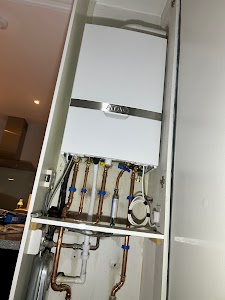
Whether you’re considering purchasing a new boiler, or have recently moved into a new property with an old standard boiler, it is important to consider how much heating your household could actually require.
We really love our shiny new boiler, it is a great upgrade for anybody and would highly recommend. It keeps your house heated, provides reliable hot water and shortens your energy bills.
First thing first, we’ll meet with you to discuss what you need. We’ll discuss the choices, recommend what we feel are the best options and provide you with a clear quotation free from any hidden extras.
We start with a home visit. We consider how big your home might be, the number of radiators you need to plan to have or already do have and how much hot water you use every day to help you decide on the size and type of boiler that’s right for your house. In this way, the answer is tailored to your home.
We want to provide you with dependable heating, lots of hot water, and higher efficiency so that you don’t have to pay more than absolutely necessary.
And we typically install three basic types of boilers.
Combi boilers are great for small spaces. They’re also compact, requiring no separate hot water cylinder or cold or hot storage tanks and firing from one unit. They’re great for smaller homes.
System boilers are recommended for larger homes, although the heating and hot water system usually rely on an additional storage cylinder. They’re great if you have multiple bathrooms or large hot water demands. System boilers are ideal if you live in a home with a high demand for hot water or more than one bathroom. It may be useful to maintain this configuration if your existing system is working well.
When we evaluate your property, we take a broader view. We factor in the dimensions of your home, insulation, number and size of radiators and how pipework is configured. The greater the efficiency percentage, the more of what you pay for in fuel becomes heat to warm your home. Standard boilers generally range from 80 to 85 percent efficiency, and high-efficiency boilers have projects that can break the 90 percent mark. Over time, that differential can make a real difference in your energy bills.
On the day of installation, we first disconnect and remove your old boiler in a safe manner compliant with Gas Safe rules.
Next, we prepare the area for the new boiler that could involve tweaking pipes and ensuring the spot is safe. When we have the new unit in place and connected, test the system to confirm it operates as it shouldefficiently. We’ll also go over how to operate the controls and thermostat so that you can feel comfortable with your new system.
New boilers cost more than replacement boilers and all the factors that affect a new boiler cost (no pun intended) apply to replacement boilers as well, such as the model you select, its make, and any modernisation work (which will be discussed shortly).
Upon completion of the survey, you’ll get a full list of costs will all costs covered.
Servicing on time and regularly ensures your new boiler continues to operate safely and effectively. An annual service makes sure everything is in working order or sees that there may be a problem on the horizon.
Regularly cleaning your boiler, addressing problems efficiently and flushing out the system every now and then can help it live longer. With proper maintenance, a good boiler should last 15 to 20 years.